
- Details
- Hits: 57
 Drug checking services have quietly become one of the most accepted tools in how society now handles illegal drug use. A sample goes in. A result comes out. Somewhere in that exchange, a seller learns whether they cut the batch correctly, and a buyer learns whether tonight’s supply is roughly what it claims to be. It sounds sensible. It sounds careful. Nobody asks what all that careful information actually serves.
What Drug Checking Services Actually Tell You
These testing tools genuinely impress. Fourier transform infrared spectrometers scan a sample and match it against a library of known substances. British Columbia’s storefront testing programme now runs a paper spray mass spectrometer, a machine that can detect concentrations as fine as 0.04 per cent across 107 different drugs. Fentanyl test strips and benzodiazepine test strips fill in the gaps. Some services even accept samples by mail, so a person never has to walk through the door at all.
None of this is trivial science. But notice what it measures. It measures purity. It measures potency. It even measures contamination. It never set out to measure whether anyone should take the drug in the first place. Researchers in Victoria have reported that the market has stabilised its average opioid potency at around ten per cent. That market is not moving toward safety. It has simply learned to sustain itself more efficiently and hand out better instructions along the way.
The Seller Becomes an “Information Node”
One of the more revealing moves in recent harm reduction research is linguistic. Researchers no longer call them sellers. They become, in the words of one Canadian study, “main nodes of information” in the community. Researchers treat them as trusted intermediaries who might one day carry scientific knowledge back through informal networks. It is a generous framing. It is also a convenient one, and it is easy to see why drug checking services need it: the whole model depends on sellers walking through the door voluntarily.
A person who sells an illegal, often lethal substance for profit is still doing exactly that. It makes no difference how many test strips sit on the counter behind them. Recasting that role as a public health asset does something quiet to the moral picture. It shifts the seller from someone the community needs protection from into someone the system now works with. Ask a family that lost someone after a dealer added an unlisted sedative to the batch whether that reframing feels like progress.
A Safer Experience Is Not a Smaller Market
Here is the part that drug testing services rarely say out loud. Better information about a drug’s contents improves the experience of taking it. It does very little to reduce the demand for taking it at all. A buyer who trusts the result feels more confident walking away, not less. A seller who confirms the cut is right walks away with quality assurance for an illegal product.
A 2018 evaluation of one of Vancouver’s drug checking services found that just one per cent of clients at a supervised injection facility used the fentanyl test strip service, even though roughly eighty per cent of the drugs tested came back positive for fentanyl (Karamouzian et al., 2018). Wide contamination and low uptake sat side by side. That gap says something. Availability does not change behaviour anywhere near as much as its advocates assume.
This is not an argument that fewer people will die of poisoning tomorrow because a service caught a batch of unlisted nitazenes today. They probably will. The entire apparatus, however well meant, manages the supply of drug use. It never set out to shrink the appetite for it. Fewer surprises is not the same goal as fewer users.
“It Makes Them Feel Good” Is Not a Medical Explanation
Somewhere in the research that underpins this sector sits an unusually honest line. People use drugs, one researcher put it plainly, because it makes them feel good. That sentence deserves a straight reading, not a quick skim past it. In most of the cases this research describes, people are not medicating their own untreated trauma. Drugs are not the only tool available to them for that. This is recreational use. People choose it for the sensation it produces, and a scientific system now tests it and quietly approves the pursuit.
Call it what it is. A lab report does not turn hedonism into medicine. Treating that pursuit as neutral, no different to insulin dosing, changes what prevention now has to compete with. That is a system that has already made peace with the behaviour continuing indefinitely. None of this is a reason to scrap drug checking services outright, but it is a reason to stop pretending they sit outside the argument about right and wrong.
What the Evidence on Drug Checking Services Shows
None of this dismisses the data. Drug checking services do have a real evidence base behind them for reducing fatal overdoses, and the researchers behind them are not cynics chasing funding. Many come from lived experience and are trying, in good faith, to keep people alive inside a market that criminalisation has made chaotic and unpredictable. Safety and prevention are not always opposites, and a service that stops one preventable death has done something real.
The disagreement is not about whether these services save lives in the short term. It is about what harm reduction policy builds and normalises around them in the long term. It is about whether an approach that manages risk closes the door on an approach that reduces use altogether. We have raised a generation to believe that getting high safely is the ceiling of what prevention can offer. That generation deserves better. A higher ceiling was always possible.
(Source: WRD News)
- Details
- Hits: 77
There is a version of the psychedelics story that everyone already knows. A veteran who stopped waking up screaming. A cancer patient who made peace with dying. A depressive who, after decades of grey, felt sunlight again. These stories are moving, they are frequently true, and Netflix, bestselling books, presidential press conferences, and a booming investor class have spent the past several years turning them into a single, tidy narrative: psychedelics are the breakthrough that psychiatry has been waiting for.
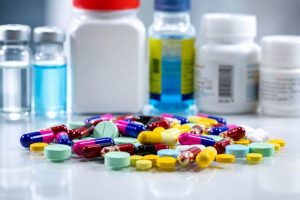
The trouble is that a good story is not the same thing as good evidence, and 2026 has been a rough year for anyone who assumed the two had already converged.
The Blinding Problem No One Wants to Talk About
Start with the mechanics of a clinical trial. The entire point of a placebo-controlled study is that participants don’t know which arm they’re in — otherwise their expectations, not the drug, start doing the work. That’s straightforward with a pill that produces no noticeable sensation. It is much harder when the “drug” produces vivid hallucinations, ego dissolution, and hours-long emotional catharsis.
A team of Canadian researchers decided to actually check how often this “blinding” was working in psychedelic trials. Reviewing 112 supposedly gold-standard studies of psilocybin, LSD, ketamine, MDMA, and DMT, they found that fewer than a third even bothered to test whether blinding had succeeded — and when they did check, it had failed more than 90 percent of the time for psilocybin, LSD, and DMT, and 85 percent of the time for MDMA. Only ketamine trials fared meaningfully better, because a sedative can plausibly mimic its effects. The researchers, writing in JAMA Psychiatry, concluded the existing trial results should be treated with real skepticism until this is fixed.
That finding landed alongside two more studies that, together, amount to a significant gut-check for the field. A systematic review and meta-analysis by Zachary Williams and colleagues took the radical step of comparing psychedelic-assisted therapy not against a sham placebo pill, but against open-label antidepressants — trials in which patients and doctors both know a real drug is being given, which is functionally what a “blinded” psychedelic trial actually is anyway. Pooling eight psychedelic trials against sixteen open-label antidepressant trials, they found the two produced nearly identical improvement on the standard depression scale — a difference of roughly three-tenths of a point in favor of the antidepressants, well within the margin of chance. In the same week, a separate triple-blind trial of psilocybin for treatment-resistant depression, led by Lea Mertens and funded independently of industry, added another disappointing data point to the pile.
None of this means psychedelics do nothing. It means that when you strip away the placebo-inflating effect of a patient knowing, unmistakably, that they’ve just taken a powerful hallucinogen, the advantage over existing treatments shrinks dramatically — in some analyses, to statistical noise. That is a far cry from “the results are in,” a phrase Michael Pollan used in the Netflix adaptation of his bestseller How to Change Your Mind, and one that critics have pointed out simply isn’t accurate.
How a Book Became a Movement
It’s worth pausing on Pollan specifically, because few individuals illustrate the gap between cultural momentum and scientific caution better than he does. His 2018 book turned psilocybin, MDMA, and LSD into dinner-party conversation for an audience that had previously associated them with Woodstock and burnout. The 2022 docuseries went further: reviewers at the time noted that by showcasing almost exclusively success stories, the show risked leaving casual viewers with the impression that psychedelic therapy is a near-universal cure, when even the most favorable clinical trials typically get only around a third of participants into full remission. One reviewer described the series as playing out like an infomercial for psychedelic-assisted therapy, right down to researchers on camera declaring that the debate was essentially settled.
This is not a minor cultural footnote. It’s the mechanism. Popular science journalism, celebrity podcasts, glossy docuseries, and — as of 2026 — the White House itself have been running well ahead of the peer-reviewed literature, and each layer of amplification tends to strip out the caveats that were present one step back. A tentative Phase 2 signal becomes a magazine feature; the magazine feature becomes a talking point on a wellness podcast; the talking point becomes political testimony. By the time the idea reaches a policymaker or a desperate patient, “shows some promise in small, unblinded trials” has quietly become “the results are in.”
We’ve Run This Experiment Before
Psychiatry has a name for what happens when enthusiasm outruns evidence, because it has happened before — twice, on two continents, in living memory.
The first round was psychedelic research itself. A wave of studies in the 1950s and ’60s explored LSD for alcoholism and neurosis with real optimism, before the research collapsed amid moral panic, sloppy methodology, and the countercultural baggage that men like Timothy Leary attached to it. Researchers today openly acknowledge they’re now roughly as far into the second wave of research as their predecessors got before that first one ground to a halt — which is less a triumphant milestone than an open question about whether history is about to rhyme.
The second round was closer to home and much more recent: Australia’s rollout of medicinal cannabis. Legalized in 2016 under intense public and political pressure, prescriptions exploded from a few hundred to more than a million within less than a decade, generating a market worth hundreds of millions of dollars. According to reporting compiled by the Dalgarno Institute, Australia’s drug regulator fielded more than 600 adverse event reports between mid-2022 and mid-2025 — including dozens involving psychosis, over a dozen involving suicidal ideation, and cases of homicidal ideation — while acknowledging it hadn’t actually investigated the safety of most of the products in question. By late 2025, the country’s peak medical and pharmacy bodies were writing jointly to the health minister to warn about coercive prescribing practices and a system being exploited by commercial interests that had outpaced the regulatory infrastructure meant to contain them.
Then, in February 2023, Australia became the first country in the world to down-schedule psilocybin and MDMA for clinical use — and it did so, according to the same reporting, over the explicit objection of its own expert advisory committee, which had cited the absence of completed Phase III trials, the difficulty of translating tightly controlled research settings into everyday clinical practice, and the fact that no approved psilocybin product existed anywhere on earth. An independent report commissioned to inform that very decision rated the certainty of the evidence as low to very low using the Cochrane GRADE framework. The regulator reversed its own interim caution after a lobbying campaign generated thousands of public submissions — submissions a delegate later noted were largely brief form responses that didn’t engage with the substance of the committee’s concerns at all.
If that sequence sounds familiar, it’s because the United States appears to be running a faster, higher-stakes version of it right now. In April 2026, an executive order directed the FDA and DEA to fast-track psilocybin, MDMA, and ibogaine, committed federal funding, and instructed regulators to establish expedited access pathways ahead of completed Phase III trials. Legal analysts at Harvard’s Petrie-Flom Center noted the political theater surrounding the signing — and pointed out that one company’s product had reportedly been pulled from a priority list and then abruptly reinstated in the same order, a detail that reads less like scientific sequencing than political stagecraft. Shares in psychedelic drug developers jumped on the news.
The inclusion of ibogaine drew particular alarm from researchers, since the compound has documented cardiac risks — including a 2026 study finding it caused clinically significant heart-rhythm prolongation in half of subjects tested, in some cases for more than a day — and has not completed even Phase I trials in the United States.
The Part the Highlight Reel Leaves Out
Beyond the numbers, there is a harder story that rarely makes it into a docuseries. The very quality that makes psychedelics interesting to therapists — the suggestibility and emotional openness they induce — is also what makes patients acutely vulnerable to the people supervising them. The most extensively documented case involves a PTSD trial participant whose sessions, later reviewed by journalists, showed her therapists behaving in ways so far outside professional norms that three related research papers were eventually retracted for ethical violations. That case wasn’t a one-off; the FDA’s 2024 rejection of an MDMA-assisted therapy application cited ongoing concerns about therapist misconduct alongside its concerns about trial design and functional unblinding, and a separate academic paper was later flagged for allegedly downplaying practices described by the therapists it interviewed.
There is also, less dramatically, a straightforward conflicts-of-interest problem. One researcher in the field has remarked that he knows only a single colleague who has never personally used psychedelics — a level of insider enthusiasm that would raise eyebrows in almost any other area of drug development, and one that sits alongside a growing web of consulting fees flowing from psychedelic companies to the researchers publishing on their products.
Caution Is Not the Same as Dismissal
None of this amounts to an argument that psychedelics have no therapeutic value, and it would be its own kind of overreach to claim otherwise. Some trials, imperfect as they are, do show genuine signal, particularly for narrowly defined, carefully screened populations under close supervision — a population and setting that bears little resemblance to how a drug behaves once it’s prescribed at scale. But “promising in small, poorly blinded trials with a devoted research community” is a meaningfully different claim than “a proven, superior alternative to existing psychiatric medication,” and the media apparatus surrounding psychedelics — bestselling books, glossy documentaries, celebrity podcasts, and now executive orders — has spent years collapsing that distinction.
What the evidence currently supports is neither the panacea of the popular narrative nor blanket rejection, but something far less cinematic: the standard, unglamorous machinery of drug regulation — completed Phase III trials, active-comparator designs that account for unblinding, independent committee review insulated from public lobbying campaigns, mandatory long-term safety data, and real structural safeguards against therapist misconduct. That machinery exists precisely because moving individual stories are not, and have never been, a substitute for population-level evidence.
Skipping it hasn’t gone well before. There’s little reason to expect this time to be different simply because the sales pitch has gotten better.
Dalgarno Institute
Sources: Orsini et al., “Blinding Integrity in Psychedelic Randomized Clinical Trials,” JAMA Psychiatry (2026); Williams, Barnett & Szigeti, “Psychedelic Therapy vs Antidepressants for the Treatment of Depression Under Equal Unblinding Conditions,” JAMA Psychiatry (2026); Mertens et al., “Efficacy and Safety of Psilocybin in Treatment-Resistant Major Depression: The EPISODE Randomized Clinical Trial,” JAMA Psychiatry (2026); Dalgarno Institute, “The Psychedelic Movement in the US: A Risky Experiment?” (2025) and “When Politics Overrides Science: The Dangerous Rush to Psychedelic Medicine” (2026); Psychedelic Spotlight and Overland literary journal reviews of Netflix’s How to Change Your Mind (2022); additional reporting via Science Media Centre, Drug Discovery Trends, Petrie-Flom Center (Harvard Law), and Medical Xpress.
- Details
- Hits: 163
 A New York Times podcast on the global drug crisis raises urgent concerns, but leaves the most important questions unasked.
There is something almost cinematic about the way The New York Times framed its recent investigation into the synthetic drugs crisis. A mysterious death in a Chicago jail. A criminal investigator who says “keister” instead of something cruder. A “Rosetta Stone” of ten overlapping substances on a single sheet of paper. Drug-soaked mail laundered through Amazon packaging. A paper baron operating out of the South Side.
The episode of “The Daily” features NYT international investigations correspondent Azam Ahmed in conversation with host Natalie Kitroeff. It is gripping journalism. Ahmed spent more than a year embedded in the world of synthetic drug trafficking, and his reporting is serious, detailed and built on sustained access. The Cook County jail investigation is a genuinely revelatory piece of work.
But what the episode reveals about contemporary drug-policy thinking is, in some respects, more troubling than what it reveals about the drugs themselves. It is worth examining closely, because the gaps are not random – they follow a concerning pattern.
The Reporting at the Heart of the Episode
The conversation covers substantial ground. Ahmed describes a paradigm shift in global drug markets: the move from plant-based substances to synthetically manufactured ones. The United Nations Office on Drugs and Crime has catalogued more than 1,450 new psychoactive substances, a figure that has tripled in a single decade. As Ahmed puts it, making a new drug is now “like chefs testing new recipes,” because the chemistry can be altered endlessly in a lab.
He traces the Cook County jail story from a 2023 death that left no visible contraband, only burned paper fragments. Investigators eventually found that people were smuggling synthetic drugs by dissolving them into liquid and soaking sheets of paper. Mail, personal visits and Amazon third-party sellers all served as entry points. One sheet recovered in August 2024 carried ten different synthetic compounds, from cannabinoids to opioids to substances found in rat poison.
Ahmed also discusses nitazenes, a class of opioids developed in the 1950s but never brought to market because of their extreme potency. He says they can be 20 to 40 times stronger than fentanyl, and that authorities now find them across Europe and the United States. Methamphetamine production in Southeast Asia, he reports, operates at a scale that dwarfs cartel output in Mexico. Enforcement pressure on fentanyl precursor chemicals, he argues, simply pushed criminal networks toward even more dangerous alternatives.
From this, Ahmed draws his own clear and not unsurprising conclusions:
- Enforcement-focused approaches have failed and may have made the crisis worse.
- Harm reduction, he suggests, must form part of any serious response.
- The policy conversation, in his view, should move away from what he calls “retrograde rhetoric” about cracking down.
That is the frame – the lens this ‘investigation’ wants us to look at and through, Ah, but this deserves closer examination than the episode gives it.
“The War on Drugs Has Failed”: A Claim, Not a Finding
Throughout the episode, Ahmed treats the failure of the war on drugs as the starting point rather than the conclusion. He says it plainly: “We all know the war on drugs has failed. We also know it not only failed, it kind of made things worse.”
That is a significant claim to present as settled fact, and not unsurprisingly with confirmation bias leaning investigations, the episode never tests it.
What evidence does it actually offer?
- Enforcement operations that failed to permanently disrupt drug markets.
- The arrest of a South Side paper baron that did not reduce overdoses at Cook County.
- Cartel crackdowns that did not stop fentanyl.
- Precursor restrictions that appear to have driven innovation toward nitazenes.
These observations are real, however, all these examples do is show the limits of supply-side enforcement in isolation. They do not show that the entire framework of drug control made things worse, and no one in the room considers what conditions would look like with no enforcement infrastructure at all.
There is also a circularity that this conversation never challenges. The argument runs: Enforcement suppressed fentanyl, so criminals built something worse, therefore enforcement made things worse. Apply that logic to any regulation and it collapses. Restricting dangerous products sometimes drives innovation toward replacements, but that is not an argument for ceasing to restrict dangerous products.
The War FOR Drugs
Here is the larger omission. The episode scrutinises the “war on drugs” relentlessly, while ignoring its mirror image entirely: the war for drugs being actively, no, assiduously and relentlessly being waged.
If there has been a fifty-year campaign to suppress supply, there has also been a sustained, well-resourced and increasingly successful campaign to expand demand, normalise consumption and lower the social and legal cost of using. It has commercial backers, advocacy organisations, lobbying budgets, friendly media framing and a cultural tailwind. The legal cannabis industry, growing rapidly across multiple jurisdictions, has a direct financial incentive to enlarge its user base. Organised pro-drug movements actively work to expand the acceptability of a range of substances, influencing legislation and public opinion. Entertainment, music and social media steadily frame intoxication as ordinary, even desirable, particularly to the young.
That campaign has arguably been far more effective than the constantly undermined enforcement effort it is so often contrasted with. Yet it appears nowhere in the episode as a named actor. When you examine one side of a conflict with forensic attention and treat the other as if it does not exist, the analysis is incomplete by definition. The honest question is not only whether the war on drugs failed – it is whether the war for drugs has been quietly winning.
The Demand Nobody Discussed
This points to the deeper gap. Why do so many people, in so many societies, actively want these substances?
Half an hour on one of the most serious public health crises of the modern era produced almost no examination of the forces that create and sustain demand. To the episode’s partial credit, Kitroeff does eventually raise the consumption side, asking about “the alternate route here… addressing demand.” But watch what happens next. Ahmed immediately reframes the question as “legalisation, or decriminalisation,” and from there moves to harm reduction. Demand is raised, and then redirected, away from any discussion of reducing it.
That redirection is the whole problem in miniature. Demand reduction received no real attention. Early intervention did not feature and school, community and family-based prevention went unmentioned. Recovery appeared only briefly, framed through harm reduction of course. Nobody asked why people begin using, or what might reduce initiation or facilitate active recovery. The cultural normalisation of drug use, the commercial expansion of markets, the social conditions that make chemical escape attractive: none of it was scrutinised.
Inmate Rashad Rowry came closest to the heart of it when he described becoming “addicted to not caring,” to the drug’s power to make him indifferent to his circumstances, his future and the deaths around him. That is profound hopelessness, and it is a demand-side statement of the first order and it deserved far more than a passing moment of reflection. The question it begs, what produces that hopelessness and how might it be prevented, is precisely the one the episode does not ask.
Drug-Soaked Paper Is Not New
The episode presents drug-soaked paper as an apparent startling recent innovation, encountered with bewilderment, defeating existing detection methods. The framing suggests a genuinely novel threat. The chemistry is new, however, the method is not.
Drug-infused paper has been a street staple for more than half a century. LSD was distributed on absorbent sheets so commonly that one of its enduring street names was simply “blotter.” It was also known as “sacrament,” because users would soak it into wafers, sugar cubes, or any medium that would hold the liquid, and then consume it. The principle, dissolve a potent compound into liquid and carry it on an absorbent material, is decades old. What is genuinely new is the range of synthetic compounds now being used, and the deployment of the method in jails specifically to defeat detection of more conventional contraband.
That distinction matters for policy. If drug-soaked paper looks entirely novel, it seems to demand entirely novel responses. Seen accurately, it is a modern chemistry applied to an old smuggling method, one more turn in a long cycle of adaptation and counter-adaptation. Emphasising novelty at the expense of that history distorts the conclusions that follow from it.
Harm Reduction and the Assumption of Inevitability
When Kitroeff asks what can actually be done, Ahmed centres his answer on harm reduction and wheels out an increasingly misrepresentative ‘chestnut’. He parrots a well worn pro-drug activist mantra in describing the issue as a public health matter rather than a criminal one, something “Europe is really focused on.” That can be a legitimate perspective, but again, only half the story, but the episode simply never interrogates the assumptions inside it.
If you listen to the interview you will hear how Ahmed defines the approach: “We understand people are going to use drugs. We understand that we’re never going to be able to fully reduce all of the demand.” There is that sabotaging apriori assumption – that sentence does a great deal of quiet work. It accepts as given that drug use is permanent and that reducing demand is a lost cause. From there, the only sensible goal becomes managing the consequences. That is a coherent position. It is not a neutral one, and it is not the only one available.
Three assumptions sit inside it, each worth the same scrutiny the episode reserves for enforcement.
- First, that abstinence and recovery are unrealistic for most users, a claim that research on natural recovery from substance use disorders directly challenges.
- Second, that reducing initiation will not work, which effective school-based prevention and the long decline in tobacco and drink-driving both contradict.
- Third, that the cultural forces driving demand are beyond intervention, which the public health practitioners who turned the tide on smoking would dispute.
There is a subtler risk too. A comprehensive harm reduction framework can function as a “permission model,” accommodating drug use as normal and ongoing in ways that lower the perceived cost of starting. E.g Needle exchange cuts HIV transmission – Naloxone saves lives. These tools have a genuine evidence base and a real place, but a framework that manages the consequences of use while showing little interest in reducing the number of people who start is not a comprehensive public health strategy – it is at best, containment. And containment, as the jail reporting itself shows, tends to fall behind the adaptive capacity of the thing it is trying to contain.
The Question Nobody in the Room Asked
Investigative journalism is most credible when it applies its scepticism consistently, including to the views it finds congenial.
Early in the episode, Kitroeff notes, in passing, that she has “a special interest reporting experiences in this world.” The phrase is left to hang – no elaboration, no clarifying question. In a half-hour conversation about who uses drugs and why, that is a curious thing to skip past.
It raises a question the episode never asks of itself; Contemporary drug-policy discourse leans heavily on the “living experience” of drug use as a source of insight and authority. If living experience is treated as a qualification when it belongs to the people being studied, then transparency about the living experience of the people doing the studying matters at least as much. Did anyone in that room, the guest, the host, the producers shaping the framing, use these substances recreationally? It is not an accusation, it is the obvious question, and its absence from a conversation that prides itself on “dispassionate, brutal honesty” is conspicuous. A genuinely sceptical investigation would have asked it of everyone present, not only of the inmates.
A War FOR Sobriety
Ahmed’s reporting, on Cook County, on nitazenes, on Southeast Asian meth, on the sheer adaptive sophistication of these networks, is serious and important. The reporting is far more rigorous than the policy analysis wrapped around it.
The “war on drugs has failed” narrative functions as settled truth rather than a contested claim. The war for drugs, the organised commercial, cultural and political effort to expand use, goes unmentioned. Demand is raised once and immediately redirected into legalisation and harm reduction. Prevention, early intervention and demand reduction are essentially absent. Harm reduction receives sympathy but no scrutiny. And the most basic question, why so many people in so many societies are reaching for these substances at all, goes almost entirely unasked.
That omission is not incidental. When demand is treated as a fixed constant rather than something that can be reduced, prevention disappears and containment becomes the only strategy left on the table. And containment, as this episode’s own reporting demonstrates, tends to generate the very innovation it is trying to suppress.
The real crisis may not be that the war on drugs has failed. It may be that no one has yet seriously attempted a war for sobriety.
Dalgarno Institute (WRD News)
Source: How A Drug Cocktail Made of Paper Is Killing Inmates
- Details
- Hits: 157
Building a Healthier Future Through Conscious Choices
 Making choices that support personal health and long-term well-being is one of the most empowering journeys a young person can embark upon today. In a world full of academic pressures, social media expectations, and peer influences, deciding to look after your mind and body is a profound act of self-reliance. Choosing to live a life free from intoxication provides massive advantages for your personal growth. By exploring the fundamental substance abstinence benefits, we can understand how steering clear of intoxicants alters your life path for the better.
Many people think that experimenting with drinking or using drugs in a ‘recreational’ context is just a standard part of growing up. However, deciding to completely avoid these substances creates a solid foundation for your future career, relationships, and physical vitality.
The Crucial Substance Abstinence Benefits for Brain Development
The human brain continues to grow and refine its neural pathways until a person reaches their mid-twenties. The prefrontal cortex is the specific region responsible for planning, emotional balance, impulse control, and rational decision-making. When alcohol or illicit drugs enter a developing brain, they disrupt this intricate wiring process.
Choosing sobriety allows the brain to develop to its full intellectual and emotional capacity. Young people who maintain a lifestyle free from chemical interference consistently demonstrate sharper memory retention, better concentration, and superior problem-solving skills. Staying away from peer pressure and chemical habits means you avoid the cognitive fog that frequently holds people back from achieving their top marks at school or university.
How Sobriety Safeguards Mental Health and Stability
There is a massive connection between substance consumption and emotional difficulties. Many individuals mistakenly believe that a drink or a drug can help ease social anxiety or stress. In reality, chemical substances alter your brain chemistry and actually worsen underlying mental health struggles over time.
Choosing to avoid drugs and alcohol entirely helps keep your emotional baseline stable. It prevents the sharp mood swings, sleep disruptions, and heightened anxiety that toxic substances cause. By developing healthy, natural coping mechanisms like exercising, writing, or playing music, young people build true psychological resilience. You learn to handle life’s inevitable challenges with a clear mind rather than relying on a temporary chemical escape.
Enhancing Physical Health and Freedom from Chemical Habituation
The physical rewards of avoiding toxic substances are immediate and long-lasting. Alcohol and recreational drugs place a heavy burden on your vital organs, especially the liver, heart, and kidneys. According to official UK health data published by the Office for National Statistics, there were 10,473 deaths from alcohol-specific causes registered across the United Kingdom in 2023 alone, representing the highest number on record. This stark statistic highlights the severe toll that toxic substances take on the human body.
Choosing a chemical-free lifestyle ensures your energy levels remain high and consistent. Your sleep patterns improve, your immune system stays strong, and your body recovers much faster from physical exertion. Furthermore, preventing the initial use of addictive substances is the most effective way to eliminate the danger of chemical habituation altogether. When you never open the door to substance misuse, you never have to face the difficult, painful path of trying to break an addiction later in life.
Reaping the Long-Term Substance Abstinence Benefits in Daily Life
Choosing to live without reliance on intoxicants impacts every single aspect of your daily existence, leading to deeper social connections and greater financial freedom.
- Authentic Relationships: Socialising without chemical stimulants forces you to develop genuine communication skills. The friendships you build are rooted in shared interests, mutual respect, and real conversations rather than shared intoxication.
- Financial Independence: Maintaining a lifestyle centered on health saves an incredible amount of money. The financial capital that would otherwise be spent on nights out, alcohol, or illicit substances can be redirected toward meaningful goals like buying a car, travelling, or funding a business venture.
- Unlocking True Potential: When you are not held back by the physical or mental exhaustion of hangovers and comedowns, you have the focus required to pursue your passions. Whether your goal is mastering a sport, learning a complex instrument, or launching a career, clarity of mind is your ultimate advantage.
Cultivating a Supportive and Healthy Social Environment
Embracing the primary substance abstinence benefits does not mean isolating yourself from social activities. It simply means choosing a lifestyle that puts your future first. Across the United Kingdom, a growing number of young people are choosing to stand up against peer pressure. Recent lifestyle data indicates that around 25% of young individuals aged 18 to 24 in the UK now choose to be completely teetotal. This positive shift shows that sobriety is increasingly recognised as a modern, forward-thinking choice.
You can actively protect your path by seeking out peer groups that value wellness, fitness, and authentic creativity. Surrounding yourself with individuals who respect your choices makes it much easier to stay committed to your personal goals.
Ultimately, avoiding drugs and alcohol is an active investment in your future happiness. By keeping your mind sharp and your body strong, you maintain full control over your decisions and unlock your true potential.
(Source: JAMAnetwork)
- Details
- Hits: 177
 Scientists at the University of Technology Sydney (UTS) have raised serious concerns about the vaping effects on young people after a new study found that e-cigarettes pump toxic metals directly into the lungs. Published in the journal Analytical and Bioanalytical Chemistry, the findings show this happens even after brief use, at levels well below what most people vape in a typical day.
Researchers detected lead, copper, and nickel building up in lung tissue. They also found organometallic compounds linked to tin and mercury. These forms are more bioavailable than standard inorganic metals, meaning the body absorbs and reacts to them more quickly.
The Device, Not Just the Liquid, Is to Blame
Lead researcher Dr Dayanne Bordin, a lecturer in analytical chemistry at UTS, said the device itself drives much of this exposure.
“The metal profiles are consistent with emissions from heating coils and electrical components,” she said. “Unlike cigarettes, which are relatively consistent products, manufacturers often produce e-cigarettes with poor quality control. The materials and components carry unknown toxicological risks.”
Most safety assessments focus on e-liquid ingredients. But this research shows the hardware generates its own harmful emissions. Regulators have largely ignored this side of the problem.
Users Cannot See or Smell What They Are Inhaling
This is what makes e-cigarette risks for youth so difficult to address. No visible smoke. No obvious warning sign. People have no way of knowing they inhale trace metals with every puff.
“Vaping can deliver toxic metals directly into the lungs, even after short-term use,” said Dr Bordin. “These metal exposures are largely invisible and rarely discussed, which makes them especially important to flag for young people.”
The study found that even sub-daily exposure levels produced measurable metal accumulation in lung tissue. The harm threshold appears lower than researchers previously thought.
Youth Vaping Rates Keep Climbing
Understanding the vaping effects on young people matters now more than ever. In Australia, e-cigarette use among young adults jumped from 5.3% in 2019 to over 21% in 2023. Adolescent rates followed a similar trajectory. Globally, aggressive marketing has normalised vaping as a low-risk activity. Millions of young people now vape without understanding what they actually inhale.
The appeal is not hard to understand. Vaping looks cleaner and carries fewer obvious signals of harm than tobacco. Yet the science keeps building a more troubling picture, one that goes well beyond nicotine dependence or throat irritation.
Researchers Push for New Regulations
Dr Bordin and her team want regulators to act. Current frameworks require no routine testing of metal or organometallic emissions from heating coils or device components. That needs to change.
“There is a need for standards and routine testing of metal and organometallic emissions from e-cigarettes, particularly from heating coils and internal components,” she said. “Risk assessment frameworks and public health guidance must incorporate metal exposure and bioaccumulation.”
The researchers also want manufacturers to meet higher material standards. Right now, companies can sell devices built from components with no formal safety review for inhalation risks.
What Parents and Young People Need to Know
The e-cigarette risks for youth extend well beyond what most people associate with vaping. Metal accumulation in lung tissue at a young age carries consequences researchers are only beginning to map. Young people start earlier, vape more frequently, and face decades of potential exposure ahead.
The belief that vaping is safer than smoking has never had solid scientific grounding. Studies like this one keep adding new weight to that concern. Regulatory bodies, manufacturers, and the public all need to take the evidence seriously.
For young people especially, the message from this research is clear. What you cannot see can still cause serious harm.
Source: technology
- One in Five Young Australians Now Vaping, With Mental Health Links Raising Alarm
- Bubblegum Flavour, Lead Vapour: The Science of What Vaping Actually Does to Your Body
- Five Psychedelic Drugs in a Tobacco Plant: The ‘Medicinal’ Argument That Was Never Really About Medicine
- MDMA Use Linked to Brain Shrinkage and Long-Term Memory Loss, Major Study Finds