
- Details
- Hits: 55
 Governments say they want to end child sexual exploitation. Yet few will say what keeps it running. A 2026 practice tool by researcher Genevieve Bloxsom answers part of that question, and anyone who writes drug policy should read it. Drugs are among the things perpetrators use to hold children. The illicit drug trade is arguably the biggest on earth, so that link deserves attention.
Released under a CC BY 4.0 licence, the Bloxsom De Webber Tool helps agenciesplan how to take apart what the research calls the Web of exploitation. Children who lived through exploitation contributed their expertise to its design. Workers map every strand: the perpetrators, the facilitators, the child’s unmet needs and whatever stops that child from leaving.
How Child Sexual Exploitation Holds a Child in Place
A perpetrator abuses a child and promises something in return, the tool says. For example, it might be resources, affection or the withholding of harm. The goal never changes: wear down the child’s resistance.
Figure 1 in the research shows what perpetrators hand over, and the list is blunt. Alcohol, vapes, cigarettes, methamphetamines and other drugs fill the addictive substances segment. Money, transport, gift vouchers and clothing sit beside them. The mapping template then asks workers to record substance dependence as a factor that prevents escape. It also lists substances among the unmet needs that exploitation promises to meet.
The tool doesn’t weigh in on drug law, but it does record that substances help the Web hold a child. Its worked example also draws on five children who described how they saw their own Web.
Governments Condemn Child Sexual Exploitation and Normalise the Fuel
Public promises to stop the sexual exploitation of children are everywhere. Yet policy often points the other way. Dalgarno Institute material argues that decriminalisation and other permission models promote substance use instead of preventing it. Its 2024 paper, titled Substance Use and Family Violence: Permission Policies vs the Rights of the Child, goes further. It says the way violence gets separated from alcohol and other drug use looks like more than a mere act of cognitive dissonance - that argument is Dalgarno’s, not the Bloxsom tools.
Still, the tool offers facts that are hard to wave away. If perpetrators use substances as currency, then treating those substances as ordinary consumer goods deserves hard scrutiny. Dalgarno links growing permission for substance use to growing demand. It says that demand feeds the crisis of family violence and neglect.
The Data That Disappeared From View
The evidence has its own problem. Dalgarno Institute’s 2020 paper flagged a troubling shift. Over recent years, it said, the specific effects of alcohol and other drugs on children had been ignored or collapsed into broader mental health data. Why the drift, it asked? At the very least, drug use should appear as a comorbidity instead of vanishing from data sets completely.
By 2024, Dalgarno Institute was describing a near decade long removal of substance use from public reporting on family, child and intimate partner violence. It said the removal looked almost protective of those pushing for drug permission. Dalgarno also wanted to know who had been burying the data.
These are Dalgarno Institute’s claims, and they cover family violence and child abuse broadly, not just child sexual exploitation. Dalgarno admits you can’t draw conclusions from silence in data sets. Even so, it says the data on record shows alcohol and other drugs are more often involved than not in child abuse, and it points to their part in its frequency, intensity and ferocity. Either way, a Web can’t be mapped from missing data.
What the Numbers Still Show
Some figures survive. Dalgarno cites police reporting for 2018 to 2019. It recorded more than 1,500 attended family violence incidents involving people aged 0 to 19 where alcohol was definitely or likely involved. The figures come from AODstats Victoria, but Dalgarno notes they leave out other illicit drugs, which only amplifies the data.
That paper also quotes the first round table of the Federal Circuit and Family Court of Australia. There, a speaker said high risk family violence filed in the courts had been thought to be around 38 per cent, but was closer to 60 per cent. That figure covers high risk family violence in general, not substance use alone, but it shows the scale of the problem.
Dalgarno’s page on child abuse adds the Australian Child Maltreatment Study. It found that Australians who experience maltreatment are substantially more likely to have severe mental health problems and severe health risk behaviours. Meanwhile, the Commissioner for Children and Young People Victoria lists sexual offences and sexual misconduct against a child among five types of reportable conduct. Dalgarno argues that alcohol and other drugs can hasten, multiply and intensify such harms.
Why Soft Disruption Needs Honest Data
The Bloxsom tool runs on two tracks. Soft disruption deals with the factors that let exploitation continue, such as unmet needs, threats and substance dependence. Hard disruption, often with police, stops perpetrators reaching the child. The tool says to start soft unless there’s a risk of serious injury or death. It also says hard measures should target the perpetrator’s actions, never the child’s. Agencies are asked to bring in entities such as Uber, Amazon, Instagram and banks to help spot exploitation.
Planning against child sexual exploitation therefore depends on honest data. After all, a system that can’t see substance involvement can’t plan to remove it. Dalgarno’s answer is a far more serious campaign of prevention and demand reduction. It also says alcohol and other drug policy can’t be siloed from community health policy. For the sexual exploitation of children, that points back to the tool’s own message: remove every dependency on the perpetrator.
Questions Governments Must Answer
Dalgarno Institute’s investigative questions are blunt. Who has been burying the data on substance use and family violence? Why are courts not exposing the connection? And why are lawmakers silent on both correlation and causation? Does the media ever ask?
Governments that publish strategies against child sexual exploitation therefore owe the public answers. Restoring clear reporting of alcohol and other drug involvement would be a modest first step.
Dismantling child sexual exploitation means pulling every strand of the Web – substances are one of them, and it’s time governments said so.
Dalgarno Institute
Sources
- The Bloxsom De Webber Tool: Dismantling the Web of Child Sexual Exploitation
- Child Abuse, Girls a Particular Target, the AOD Factor
- Substance Use and Family Violence, Permission Policies vs the Rights of the Child
- Children, Real and Lasting Casualties of Domestic, Familial and Intimate Partner Violence, The AOD Connection
- Details
- Hits: 124
A new national study of MDMA deaths has put hard numbers on an awkward point for drug checking. Much of the risk sits outside the pill, in the body that takes it and in everything else taken alongside it.
Researchers at the National Drug and Alcohol Research Centre at UNSW Sydney examined 217 deaths recorded between 2016 and 2025 in the National Coronial Information System. The findings appear in the journal Addiction. Trend analysis stops at 2023, because coroners had closed only 51.7 per cent of 2024 cases and 25 per cent of 2025 cases. Within that window, the death rate climbed steeply until 2019 and then fell by roughly 27 per cent a year. The authors add that the confidence intervals were wide.
 Most deaths involve a mix of drugs, not one pill
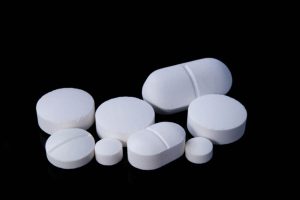
In 179 of the 217 cases, or 82.5 per cent, coroners attributed death to multiple drug toxicity. Just 38 deaths came down to MDMA alone. Other psychoactive drugs turned up in 199 cases (91.7 per cent). Other stimulants appeared in 67.7 per cent, including cocaine in 38.2 per cent and methamphetamine in 36.4 per cent. Opioids featured in 45.2 per cent, and alcohol in 33.2 per cent.
The paper does not say how much of that came from the same tablet. Even so, the limit of drug checking is plain. A test examines a sample of one pill. It cannot see a line of cocaine, a night of drinking or an opioid already in someone’s system. The authors describe mixing MDMA with other stimulants as a particularly risky pattern of use.
Earlier national research points the same way. An information sheet summarising a study of 392 MDMA related deaths between 2000 and 2018 reports that 48 per cent involved polydrug use. It records no deaths from contaminants or impurities in pills. Pills mixed with PMA accounted for 3 per cent, and a variety of other drugs for another 3 per cent.
The risk lives in the person, not only the pill
Pathologists examined the heart in 199 cases. They found an enlarged heart in 33 (16.6 per cent) and severe coronary artery disease in 27 (13.6 per cent). The average age of those who died was 33.5. The authors call these high levels for such a young group. Sudden collapse (17.1 per cent), hyperthermia (12.9 per cent) and cardiac arrest (12.4 per cent) were the most commonly recorded signs at the fatal incident.
The 1995 death of 15 year old Anna Wood, Australia’s first recorded ecstasy death, shows the problem for drug checking. According to the information sheet, her pill contained no impurities or adulterants, and four friends who took pills from the same batch survived. On that account, a laboratory check of the tablet would have found nothing to warn her about.
Dose offers little comfort either. The sheet cites a South Australian study of 49 MDMA users, none of whom died. Among those who took 100 to 115 mg, peak blood levels varied tenfold, from 120 to 1040 ng/mL. By comparison, the median blood concentration in the coronial study was 0.41 mg/L, which equals 410 ng/mL. The sheet’s reading is that the milligrams in a pill cannot predict whose blood will reach a toxic level. It also cites rodent research in which rats given a fifth of a lethal dose all died once the room warmed from 22 to 29 degrees Celsius.
Why drug checking misses where people die
Only 16 deaths (7.4 per cent) occurred at a music festival. In contrast, 171 (78.8 per cent) happened in a private setting such as a home or hotel room, and 61 people (28.1 per cent) were alone when they died. Another 30 deaths took place in public spaces such as bars and streets. A drug checking service operating at an event, however well run, reaches a sliver of that picture.
Meanwhile, 101 people (46.5 per cent) received medical intervention before they died. That figure points to the value of spotting overheating, collapse and seizure early. The authors say so directly, and they warn that using MDMA alone can be a dangerous practice.
A green light that can backfire
Pill Testing Australia’s classification, reproduced in the information sheet, gives a white card when a sample matches what the patron expected. A red card goes to substances linked with increased harm, overdoses or death. A pill containing only MDMA therefore earns a white card. The sheet notes that MDMA was in 90 per cent of the 158 pills tested in Canberra in 2019. The red cards went to seven pills containing a different stimulant.
The Australian National University evaluation, as quoted in the sheet, found that most patrons already had an accurate idea of what they had bought. However, those who received confirmation were “likely to take as much or more than originally intended.” In other words, pill testing told people little they did not know and may have nudged their use upward.
What the authors recommend and what the figures show
In fairness, the study authors do say buyers would be prudent to use a drug checking service where one exists, citing evidence of adulteration. They also stress that people who use MDMA need to understand its effects on the heart, the dangers of combining it with other stimulants, and the need for immediate medical help when someone overheats, collapses or has a seizure.
Yet the data back those warnings far more strongly than they back drug checking. Adulteration, the main argument for testing, accounts for a small minority of deaths in the earlier national study. The authors link the fall in deaths after 2019 to reports of lower MDMA availability and purity during COVID, although they did not test that link. They do not attribute it to any testing service.
A drug checking result tells a person what is in a tablet. The coroners’ files suggest that is rarely what decides who survives the night. Hearts, heat, company and combinations all play a part. The surest way to avoid every risk in these files is not to take the drug at all.
Dalgarno Institute
Sources:
- Details
- Hits: 136
ACT paramedics attended nearly 4000 callouts linked to alcohol and drugs in a single year, the latest ambulance surveillance data shows. Australia’s Annual Overdose Report 2026, published by the Penington Institute, also counted 28 unintentional drug induced deaths in the ACT in 2024
Those numbers come from a city that has recently rewritten how police handle small amounts of illicit drugs. The figures do not show the new rules caused anything, and this article does not suggest they did. But with the Canberra drug law changes now almost three years old, it isworth looking at what the law does, what Parliament heard before it passed, and what evidence has come in since.
What the Ambulance Figures Show
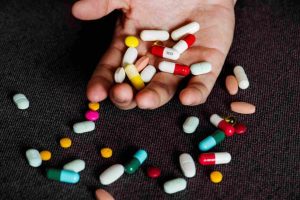
Alcohol made up the biggest share. Serious intoxication led to 2070 ACT callouts in 2024, and illicit drugs and pharmaceutical medications together triggered more than 1900.
Amphetamines are the sharpest rise. Ambulance attendances involving them jumped by more than 70 per cent between 2022 and 2024, reaching 333 incidents. The ACT and Tasmania also had the highest share of callouts involving more than one substance, at almost 22 per cent.
The danger has not eased. ACT Policing said in recent public safety alerts that seven people had died from suspected opioid overdoses since August 2026.
Canberra’s drug checking service, CanTEST, reported a sample expected to be cocaine that was only a mixture of heroin and its byproducts.
Two Reforms That Are Easy to Confuse
The Canberra drug law changes arrived in two stages, close together. The cannabis law passed in September 2019 and started on 31 January 2020. The wider personal possession rules started on 28 October 2023.
The second change did not legalise the drugs it covers, and it left supply alone. What it did was cut penalties for small amounts and open more routes into health services. That difference is easy to lose, and the research later in this article suggests plenty of people have lost it.
What the Cannabis Review Found
The ACT Health Directorate published its statutory review of the cannabis law in August 2024. Its verdict was that the Act appears to be working as intended. Cannabis use stayed largely stable, with 8.7 per cent of Canberrans using it in 2022 to 2023 against 11.5 per cent nationally. Charges and police diversions fell to very low levels.
The review also flagged some problems. Wastewater data pointed to rising cannabis consumption between April 2020 and October 2023, before dropping back to pre 2020 levels in the two latest tests. Across Australia, daily use among cannabis users went from 14 per cent in 2019 to 18 per cent in 2022 to 2023. ACT Policing called the clash with Commonwealth law its biggest challenge.
The review set its own limits. It left out mental health impacts and drug driving, and it heard from only a small group of organisations.
What Canberra Drug Law Changes Allow
The Government’s public explanation is blunt on one point: the ACT has not legalised illicit drugs. Police still seize them, and driving with any level of an illegal substance in your system is still an offence.
Under the 2023 Canberra drug policy reforms, a person caught with a small quantity can attend a one hour health education session with Canberra Health Services or pay a $100 fine within 60 days. The limits are 1.5 grams each for amphetamine, cocaine methylamphetamine and psilocybin, and 1 gram for heroin. MDMA is 1.5 grams or five discrete doses. LSD and lysergic acid are 0.001 grams or five doses.
The protection is narrow. Anything above those limits can still bring fines of up to $8000 and up to six months in prison, down from two years. If a small quantity case reaches court, the maximum is a $160 fine, and a criminal conviction is possible. Penalties for supply and manufacture did not move.
The Health Minister described the reform as a health response with firm edges. She said the Government does not condone illicit drug use and that the safest option is not to take drugs at all. She also called the changes incremental and said they were not expected to shift patterns of drug use in any big way.
What Parliament Was Told
The Canberra drug policy reforms of 2021 went to a Select Committee, which reported in November 2021. It took 59 community submissions and ran an online survey with almost 780 responses. Its 17 recommendations began with passing the bill.
Witnesses did not agree. Some rejected the bill, some wanted changes and some backed it. The ACT Law Society expected little effect, since police already divert people found with small amounts. ACT Policing and the Australian Federal Police Association pushed for a staged approach, and the association warned that officers would be conflicted and open to scrutiny under overlapping Commonwealth law.
Most of the other recommendations had little to do with possession limits. They asked for far more investment in alcohol and other drug services, school drug education and training for frontline workers.
Committee Chair Peter Cain dissented from the call to pass the bill. He argued it took a narrow approach to a complex problem and that criminal penalties put some people off trying drugs. He agreed treatment needed more money and warned that decriminalisation would probably add pressure to under resourced services.
The Government replied in June 2022. It agreed to 8 of the 17 recommendations, agreed in principle to another 8 and noted 1. It rejected none. Agreement in principle is not a promise to act. On the committee’s call for an independent evaluation, the Government agreed in principle but pointed to planned reviews three years after commencement. It cited nearly $20 million in new funding for alcohol and other drug services, yet said commissioning would stay within the existing funding envelope, with any extra money left to future budgets.
How Canberra Drug Law Changes Are Being Evaluated
The Government promised an independent review two years after the reform began. It hired the Drug Policy Modelling Program at UNSW, working with the Australian National University and the Canberra Alliance for Harm Minimisation and Advocacy, a group that backed the reform. The Government paid for the work. The evaluation says its conclusions were drawn independently by the evaluation team.
It tested the reform against two aims: moving people who use drugs away from the criminal justice system, and encouraging them to use health services. So it was built to measure reach and process more than drug use across the whole population.
The Government says the final report reached it on 31 March 2026. Its summary says the reforms are working as intended, with no significant negative outcomes in the first two years. That is the Government’s description of the evaluation, not the evaluation’s own findings. The full report is the place to check the detail and the limitations.
Do People Understand Canberra Drug Policy Reforms?
A peer reviewed study in Drug and Alcohol Review asked exactly that, and the answer is mixed. Researchers surveyed about 100 Canberra stimulant users and about 100 people who inject drugs in both 2023 and 2024. Several authors are linked to the evaluation team and to the Canberra Alliance for Harm Minimisation and Advocacy, and the ACT Government funded the survey questions. The paper says the Government had no role in the analysis or reporting.
Awareness of the Canberra drug law changes grew. Among stimulant users it rose from 49 per cent to 81 per cent, and among people who inject drugs from 33 per cent to 72 per cent. Most who had heard of the law knew it covered possession, not selling or supply.
The detail was shakier. In 2024, 58 per cent of the stimulant group and 48 per cent of the injecting group said it was entirely legal to possess small amounts of drugs other than cannabis. Among those who knew about the law, 28 per cent of stimulant users and 26 per cent of injecting users thought police could do nothing and let a person keep the drugs. Between one and two fifths did not name jail as a possible outcome for 4 grams of cocaine or crystal methamphetamine.
The authors said many participants seemed to confuse legalisation with decriminalisation, and they called for sustained education. The samples were small and not random, different people were surveyed each year, and the study measured what people knew, not what they did.
Where This Leaves Canberra Drug Law Changes
The Government says the Canberra drug law changes are working as intended. The ambulance data cannot back that up or challenge it, because nothing in the sources connects the two. What the evidence does show is a law that most people have heard of and many misunderstand, in a territory where alcohol and drug callouts remain high and treatment capacity was a worry at every stage of the debate.
The clearest message is the Government’s own. The drugs remain illegal, and the safest option is not to take them. Anyone struggling with drug or alcohol use can ask a doctor or Canberra Health Services about support.
(Source: WRD News)
- Details
- Hits: 165
A major parliamentary inquiry into the health impacts of alcohol and other drugs in Australia has come down firmly on one side of a long running debate. Its recommendations put prevention over harm reduction as the guiding priority, and the report leaves little doubt about it.
The House of Representatives Standing Committee on Health, Aged Care and Disability spent months working through 204 submissions and eight public hearings before releasing its findings in September 2026. The result is a report built mostly around prevention and recovery, with only a handful of harm reduction measures making the final cut.
 Thirty Recommendations, One Clear Direction
Look at where the thirty recommendations actually point and the pattern holds up. Schools would be required to run alcohol and other drug education for every secondary student. Parents would get guidance for having honest conversations with their kids. Antenatal care would include routine screening. There are digital tools for early intervention, a national strategy for training peer support workers and addiction nurses, dedicated funding for women’s treatment services, and a push for five year minimum funding contracts so recovery programmes stop having to reapply for survival every couple of years.
Harm reduction gets far less real estate. Continued naloxone distribution, wider needle and syringe access in regional areas, and a push for drug checking services make up the entire list. That is roughly one harm reduction recommendation for every three built around prevention, early intervention or treatment.
Even the report’s own wording gives the game away. It talks repeatedly about protecting children and building what it calls a “nationally coordinated early warning system,” with harm reduction access mentioned almost in passing, tucked inside a much larger prevention and surveillance framework.
Coalition Members Push Further Still
The Committee’s own report leans towards a prevention focused approach. The Coalition members go further still, using their additional comments to challenge the harm reduction measures that did make it in.
Mr Sam Birrell MP and Mr Henry Pike MP argue in their dissenting section that the Committee’s recommendation on expanded drug checking sends the wrong message. Their reasoning is straightforward: Australians need to hear that no amount of drug use is safe, and testing a pill for its contents does not change that, whatever useful information it might provide. They say funding should go towards prevention, counselling, treatment and rehabilitation instead, not measures they believe risk making drug use look acceptable.
They back this up with numbers. Risky drinking among Australians aged 14 to 17 fell from 30.7 per cent in 2001 to just 5.5 per cent in 2022 and 2023, while the share of teenagers who abstain from alcohol altogether more than doubled, rising from 31.8 per cent to 69.9 per cent over the same period. For the Coalition members, that is proof prevention messaging works and deserves more investment, not less.
Where the Evidence Still Points
Harm reduction has not disappeared from the conversation entirely. The report notes that Australia’s National Drug Strategy rests on three pillars, demand reduction, supply reduction and harm reduction, and that the strategy is due for review. Naloxone access and needle and syringe programmes both remain recommended, particularly in regional, rural and remote areas where services are hardest to reach.
But weigh that against the number of prevention and treatment recommendations, plus a formal Coalition objection aimed squarely at one of the few harm reduction proposals in the report, and the priorities are clear. Prevention comes first. Recovery is treated as central to getting people well again. Harm reduction survives, but as a supporting measure rather than the centrepiece of policy, a pattern that runs through the recommendations themselves, the Committee’s framing and the Coalition’s additional comments alike.
For families dealing with the fallout of alcohol and other drugs, that ordering matters in practical terms. School education backed by evidence, better trained clinicians, properly funded women’s treatment services and recovery pathways built to last all point in the same direction: dealing with why harm happens in the first place, not just responding once it has.
Source: (WRD News) Report on the health impacts of alcohol and other drugs in Australia
- Details
- Hits: 156
Recommendations For National Drug Strategy 2027–2036: A Prevention & Recovery Framework (Building Safer, Healthier and more Resilient Communities)
Australia stands at a crossroads. The United Nations Office on Drugs and Crime’s World Drug Report 2025 confirms what families and communities already know: our current approach to the substances and drugs issue is failing those global demographics. Australia now leads the world in cocaine consumption (per capita) and has ‘by far the highest’ global prevalence of ecstasy use. Our cannabis use is three times the global average among school students. Over 40% of Australians in drug treatment are there for methamphetamine, the highest proportion globally. Most concerning, 55% of those in treatment are under 35 years of age.
These statistics represent real people: sons and daughters, brothers and sisters, mothers and fathers, community members with unfulfilled potential. Behind each number is a family in crisis, a childhood disrupted, a future compromised.
Yet we know what works. Between 1998 and 2007, Australia’s ‘Tough on Drugs’ policy achieved a 39% reduction in illicit drug use and a 67% reduction in opiate deaths. Sweden reduced student drug use by 80%. Iceland achieved 60–90% reductions. Prevention policies actually implemented and followed up on produce a $12.88 saving in future damage management costs for every dollar invested.
The evidence is clear: prevention works, recovery is possible and productive, children can be protected, and families must be educated and equipped to that end.
This policy brief is a priority option for the National Drug Strategy 2027–2036, which returns to evidence-based prevention as the foundation of drug policy. It prioritises protecting children, supporting comprehensive recovery, and building drug-use-declining communities. It honours Australia’s international obligations under Article 33 of the Convention on the Rights of the Child, the most ratified UN treaty in history.
We can no longer afford policies that normalise drug use while claiming to reduce its harms. The time for a seriously resourced and thoroughly implemented prevention and recovery framework has come.
- Mental Health Struggles Push Young People in Foster Care Toward Higher Substance Misuse
- The Addictive Drug Industry Playbook Behind Cigarettes Is Now Selling Marijuana
- Trust, Detection and the Case for Prevention in Australia’s Drug Warning Networks
- How Adverse Childhood Experiences Push Young People Toward Substance Use and Suicide Risk